
How Kundalini and Tantra Practices Can Deepen Your Spiritual Journey

Spiritual growth is not always about learning something new. Sometimes, it begins with becoming more aware of what is already happening within us.
Kundalini and Tantra offer different yet interconnected ways to explore consciousness, subtle energy, and spiritual awareness. Through practices such as meditation, pranayama, movement, and contemplation, these traditions invite us to move beyond intellectual understanding and engage more deeply with our inner experience.
Rather than focusing only on spiritual concepts, these practices encourage us to develop a more conscious relationship with ourselves and our everyday lives.
Quick Summary
Kundalini and Tantra are traditional spiritual approaches that explore consciousness, subtle energy, and inner awareness. Kundalini is associated with the concept of spiritual energy, while Tantra offers broader philosophical teachings and practices for exploring spiritual experience. Through meditation, pranayama, movement, and consistent Sadhana, practitioners can develop greater awareness and deepen their spiritual practice. With appropriate guidance, these traditions can offer a meaningful path for both beginners and experienced practitioners.
What Are Kundalini and Tantra?
Kundalini and Tantra are rooted in different but interconnected Indian spiritual traditions.
Kundalini is traditionally described as a form of subtle spiritual energy associated with the potential for deeper awareness and spiritual transformation. It is often represented symbolically as dormant energy at the base of the spine.
Kundalini-related practices may include meditation, pranayama, mantra and movement, helping practitioners explore the relationship between the body, breath and consciousness.
Tantra refers to a broad family of spiritual traditions that explore consciousness, energy and the relationship between individual experience and spiritual understanding.
Tantric practices may include meditation, mantra, ritual, breathwork and philosophical study. Contrary to a common misconception, Tantra is not limited to sexuality; its spiritual traditions encompass much broader teachings and practices.
Together, Kundalini and Tantra offer different perspectives on exploring inner awareness and spiritual development.

How Are Kundalini and Tantra Connected?
Kundalini and Tantra are connected through their exploration of consciousness, subtle energy and spiritual awareness.
In certain Tantric traditions, Kundalini is an important part of understanding the relationship between individual consciousness and spiritual experience.
While Kundalini focuses on the concept of subtle energy, Tantra provides broader philosophical and practical frameworks for exploring that experience.
Their connection can be understood through three areas:
Energy: Exploring the traditional understanding of subtle energy and its relationship with consciousness.
Awareness: Developing a deeper understanding of the mind, body and inner experience.
Practice: Using meditation, pranayama, mantra and other spiritual disciplines to bring teachings into lived experience.
Understanding this relationship helps practitioners approach both traditions with greater clarity rather than treating them as separate techniques or simply theoretical concepts.
How Can Kundalini and Tantra Practices Deepen Your Spiritual Journey?
Kundalini and Tantra can become meaningful parts of a spiritual journey when approached through consistent practice and understanding.
Developing Greater Self-Awareness
Meditation and contemplative practices encourage us to observe our thoughts, emotions and reactions. This creates an opportunity to understand personal patterns and develop a more conscious relationship with ourselves.
Exploring Breath and Energy
Pranayama and breath awareness are important elements of many yogic and Tantric practices. They encourage practitioners to pay attention to the connection between breathing, concentration and inner experience.
Bringing Spiritual Teachings Into Everyday Life
Spiritual practice does not need to remain limited to meditation sessions. Greater awareness can also influence how we approach daily responsibilities, relationships and personal challenges.
Developing a Consistent Sadhana
Sadhana refers to a dedicated spiritual practice undertaken with intention and consistency. Through regular meditation, reflection and other guided practices, individuals can develop a more meaningful relationship with their spiritual path.
These experiences are personal and should not be viewed as guaranteed outcomes. The value often comes from approaching the teachings with patience, openness and commitment.
Can Beginners Explore Kundalini and Tantra?
Yes. You do not necessarily need previous experience with yoga, meditation or spiritual practices to begin exploring Kundalini and Tantra.
For beginners, guided meditation, basic pranayama, introductory Tantric philosophy and gentle movement can provide an accessible starting point.
For experienced practitioners, these traditions can offer an opportunity to deepen an existing Sadhana and explore spiritual teachings from different perspectives.
Some advanced techniques require appropriate preparation and knowledgeable guidance. It is important to understand the purpose of a practice rather than rushing towards particular experiences or outcomes.
Kundalini and Tantra in Australia
For those interested in exploring Kundalini and Tantra in Australia, guided experiences can provide an opportunity to engage with traditional teachings through practical learning.
At School of Dharma, the Kundalini and Tantra experience takes place at Sanctuary Burringbar, in the Northern Rivers region of NSW.
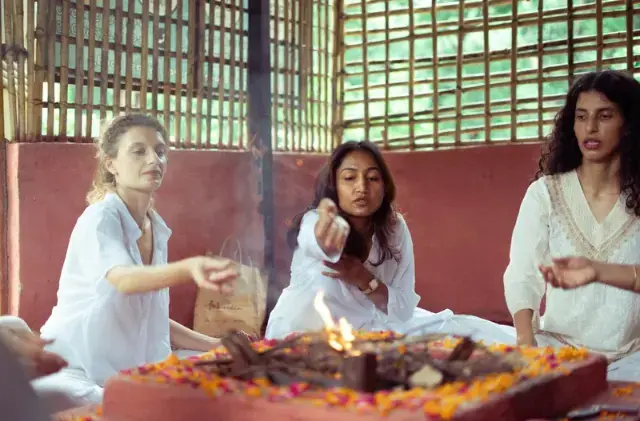
Facilitated by Ritika, this half-day experience brings together movement, pranayama, meditation, subtle energy awareness and Tantric philosophy.
It is open to both newer and existing practitioners, making it an accessible opportunity to explore these traditions without requiring previous experience.
Kundalini and Tantra at School of Dharma
At School of Dharma, Kundalini and Tantra are approached through a combination of traditional wisdom and direct experience.
Rather than simply learning about these concepts, the half-day experience encourages participants to explore how the practices can become part of their own Sadhana.
The experience includes:
Kundalini-based practices
Pranayama and breath awareness
Meditation
Tantric philosophy and wisdom
Practices for working with energy and awareness
Reflection and integration
The wider teachings of School of Dharma bring together Himalayan Kriya Yoga, meditation, Vedic philosophy, Jyotish, mantra, and Tantric traditions.
If you would like to explore these teachings through guided practice, you can explore the Kundalini and Tantra experience at School of Dharma.
Frequently Asked Questions
What is the difference between Kundalini and Tantra?
Kundalini is traditionally understood as subtle spiritual energy associated with spiritual development. Tantra refers to a broader family of spiritual traditions and teachings that explore consciousness, energy, and awareness. Some Tantric traditions include Kundalini teachings.
Can Kundalini and Tantra practices deepen spiritual awareness?
They offer different approaches to exploring consciousness and inner experience. Through meditation, breathwork, movement, and reflection, practitioners can develop a more intentional relationship with spiritual practice.
Are Kundalini and Tantra suitable for beginners?
Yes. Beginners can explore introductory teachings and guided practices without previous experience. More advanced techniques should be approached with appropriate preparation and guidance.
What role does meditation play in Kundalini and Tantra?
Meditation encourages stillness, concentration, and self-observation. It is an important practice in many Kundalini and Tantric traditions and supports a deeper exploration of inner awareness.
What is Sadhana in Kundalini and Tantra practices?
Sadhana refers to a dedicated spiritual practice undertaken with consistency and intention. It may include meditation, pranayama, mantra, and reflection, depending on the tradition.
Do I need previous experience to attend the Kundalini and Tantra experience at School of Dharma?
No. The half-day experience at School of Dharma is open to both newer and existing practitioners. Previous experience with Kundalini or Tantra is not required.
Begin Exploring Kundalini and Tantra
Kundalini and Tantra invite us to explore spiritual awareness through traditional teachings and personal practice.
Rather than focusing on extraordinary experiences, these traditions encourage patience, understanding and a consistent approach to spiritual development.
The journey is not simply about learning more. It is about bringing awareness into practice and allowing that practice to become part of everyday life.
If you feel drawn to explore these traditions, discover the Kundalini and Tantra experience at School of Dharma.
Written & Reviewed by Ritika
Ritika is a Himalayan-trained Kriya Yoga teacher, Jyotishi and meditation guide with more than 20 years of engagement with Vedic, Tantric, meditation and spiritual paths.
Her teachings bring together Kriya Yoga, meditation, Jyotish, mantra, Vedic philosophy and Goddess traditions, with an emphasis on integrating spiritual practice into everyday life.


Comments